In the News

James Hicks earns honorary doctorate from leading Danish university »UCI Associate Vice Chancellor for Research James Hicks received an honorary doctorate from Aarhus University in Denmark on Sept. 14. The professor of ecology & evolutionary biology has long collaborated with scientists at the Danish school, which is one of Europe's top centers for biological study. Hicks is a leading researcher in comparative physiology; his specific focus is the evolutionary traits of cardiac systems in reptiles such as crocodiles and turtles. He has spent significant time at Aarhus conducting seminars and helping faculty evaluate dissertation oral arguments, among other efforts. Highlighting the ceremony was an appearance by Queen Margrethe II of Denmark (pictured with Hicks). Hicks said he had no idea that he'd been nominated by Aarhus science professors for the honor. "I was completely blown away and surprised," he said. "I did not anticipate this at all."

James Hicks being congratulated by Queen Margrethe II of Denmark

Explaining exercise
April 2014: New campus initiative fosters interdisciplinary study of how physical activity promotes good health
We all agree that physical activity is good for us, so UC Irvine scientists, physicians, nurses, engineers, athletes and dancers are getting together to help answer questions about how exercise really does influence health......click here to read more

Concussions prevalent in water polo, first-of-kind survey finds:
June 2016: A first-of-its-kind survey has confirmed what some water polo players – especially goalies – have long suspected: Concussions seem to be prevalent in the sport. More than a third of water polo participants reported sustaining a concussion either during games or in practice, according to a poll conducted by UC Irvine researchers.
Read more....lWater Polo study UC Irvine
How Dinosaurs Live in Hypoxia: To learn how dinosaurs survived in low-oxygen conditions, biologist James Hicks turns to a modern relative. In a recent study, Hicks and UCI postdoctoral researcher Tomasz Owerkowicz found that alligators incubated and raised in an environment with just 12 percent oxygen (compared to today's 21 percent) had larger hearts and lungs and improved cardiopulmonary function. Click here to read more..............

Wall-E and the Professor
For three years, Ecology & Evolutionary Biology professor James Hicks kept his colleagues, friends and even his wife in suspense about a top-secret movie he was involved in with Disney/Pixar studios. Was the project related to the tanks of young alligators Hicks keeps in his lab, they wondered? Something to do with his pythons, perhaps? When the movie premiered June 27, they finally got their answer – and it was something of a surprise. Hicks worked as a consultant on “WALL-E,” an animated love story featuring not alligators or snakes – but robots. Click here for more of the story
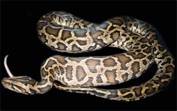
Postprandial Cardiac Hypertrophy in the Python
A Burmese python is strong, but is it a model for human exercise? According an article published in the March 3 issue of the journal Nature, the snake’s eating habits make it a prime model of cardiovascular fitness. The heart has the amazing ability to adapt to altered physiological requirements, and, according to the authors, this cold-blooded snake may provide insights into how remodeling of the heart occurs in adapting to prolonged exercise and in response to some diseases........more at the NSF website

Life Lines: A Podcast of the American Physiological Society
Episode 2: Prosthetic Arms, Frozen Frogs and Alligator Hearts
In our final segment, APS Executive Director Martin Frank will talk to Jim Hicks of the University of California at Irvine about the uniquely structured alligator heart and the role it plays in digestion. This final segment begins at 18:34.
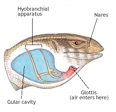
Natural History Magazine
Making my way down a trail through rosemary scrub in Florida's central sandhills, I surprised a six-lined racerunner (Cnemidophorus sexlineatus), so named for the lines that run the length of its body) basking in a wheel rut. I gave chase and the lizard streaked off-easily keeping ahead of my stumbling run........Click here to read more

Interview with Bob McDonald on CBC Radio’s Quirks and Quarks.
The Burmese Python's biggest challenge in life is not going for months without eating, or capturing, killing, and swallowing its struggling prey. No, it's digesting a meal that might be as big as itself. The metabolic demands of such a huge meal mean the snake needs to pump more oxygen into its tissues to do the hard work of breaking down and processing its prey. Dr. James Hicks, professor of Ecology and Evolutionary Biology at the University of California, Irvine, has discovered that the snake's solution is to grow its heart by as much as 40 per cent in the 48 hours after its meal in order to cope with the physiological demands.

UCI Tops All Universities in Number of Researchers Named Fellows of Leading Scientific Society -Irvine, CA, Dec 18, 2008
The 20 UC Irvine science and engineering researchers named today as Fellows of the American Association for the Advancement of Science represent the largest class this year of any university or institution in the U.S....Click here for more of the story

Robots and Superheroes: Taking Science Public
UCI researchers to talk about translating their work for mass media in 'Year of Science' kickoff. James Hicks and Michael Dennin could tell you a story about the ontogeny of cardiovascular regulation in reptiles and Langmuir monolayers. Or they could talk to you about the science of WALL-E and Superman. .........Click here form more of the story



Baby alligators reveal how dinos ruled Earth
Alligators hint at what life may have been like for dinosaur ... Tomasz Owerkowicz, Ruth Elsey and James Hicks wondered how these monsters coped at such low ...read more at the Discovery Channel


Baby alligators reveal how dinos ruled Earth
Dinosaurs appeared along alligator ancestors round 230 million years ago. New experiments on one of the planet's most adaptable reptiles, alligators, are lending clues to how dinosaurs took over the world.
The first dinosaurs appeared along with the ancestors of alligators around 230 million years ago.....read more at MSNBC
Dr. Owerkowicz Interview with Bob McDonald on CBC Quirks and Quarks
Gasping Gators: Dr. Tomasz Owerkowicz, and James Hicks, evolutionary physiologists at the University of California, Irvine, were interested in finding out exactly how dinosaurs managed to grow and thrive in a low-oxygen environment. So they got some close relatives of dinosaurs -- American alligators -- and raised them in different levels of oxygen to see how they did. It turns out the lower the level of oxygen, the smaller and slower-growing the alligators were. In this segment Bob McDonald interviews Dr. Owerkowicz, who says that dinosaurs were likely able to reach the massive size of a T-Rex only after the planet's oxygen levels began to rise. Click here to listen........


COMPARATIVE PHYSIOLOGY: Recharged Field's Rallying Cry: Gene Chips for All Organisms: At last month's comparative physiology meeting, researchers wowed the audience with studies using gene chips--glass slides dotted with thousands of bits of DNA--they had created to track the activity of many genes over time or under different conditions. Until recently, the chips were impractical for organisms whose genomes had not been sequenced. But now the seeds of microarray technology are helping comparative physiology bloom again......read more here